
Product Category
Nootropics, Synaptogenic Agents & Cognitive Enhancement Factors
Action on the Human Body
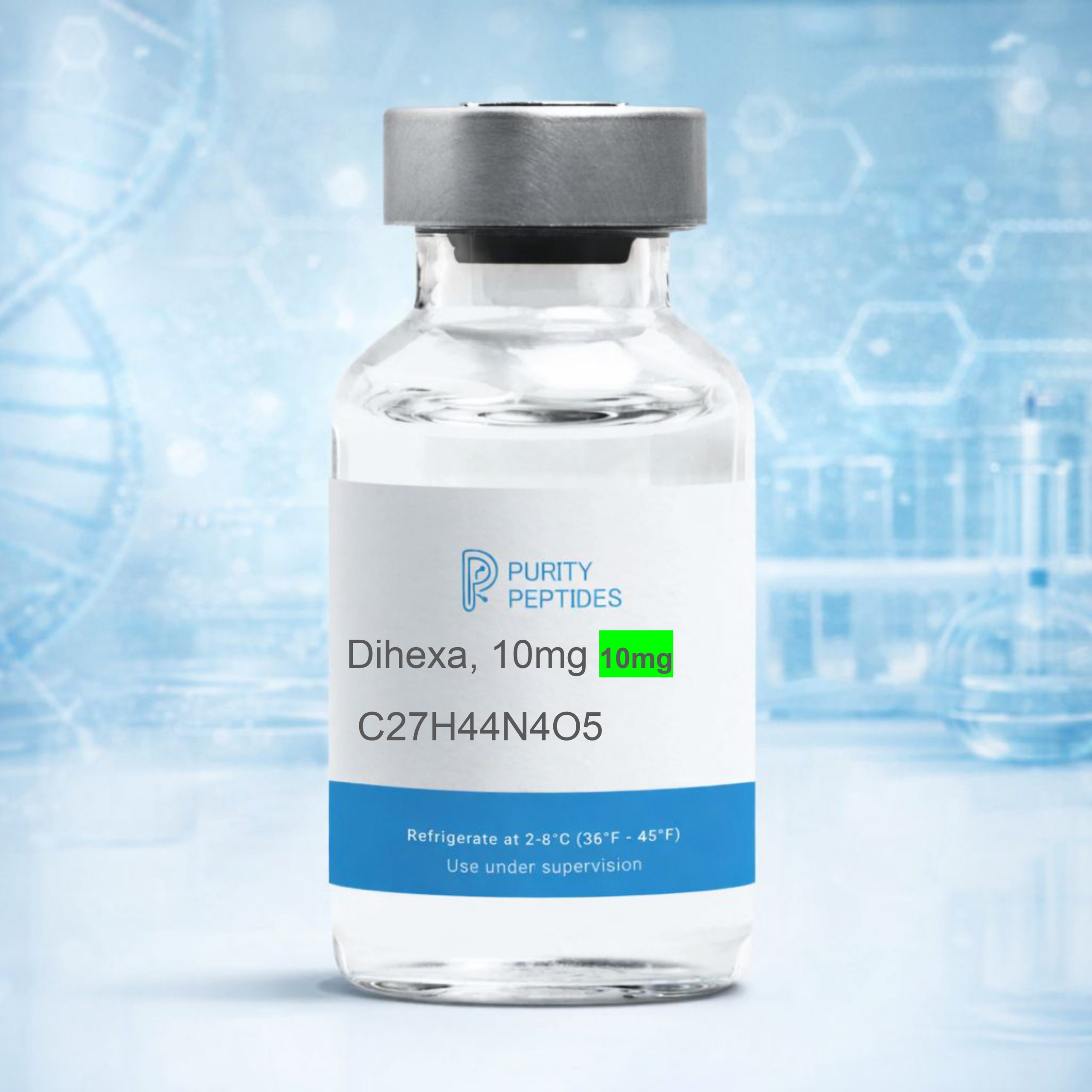
Dihexa (N-hexanoic-Tyr-Ile-(6)-aminohexanoic amide) is a highly potent, cell-permeable small molecule derived from angiotensin IV. It functions as a high-affinity agonist for Hepatocyte Growth Factor (HGF) by binding directly to the HGF molecule, which promotes its dimerization and subsequently activates its receptor, c-Met. This HGF/c-Met pathway activation drives robust neurotrophic cascades, prompting extensive spinogenesis and dendritic arborization in hippocampal neurons. Through these pathways, Dihexa accelerates the formation of new functional synaptic connections at concentrations orders of magnitude lower than native brain-derived neurotrophic factor (BDNF), dramatically enhancing baseline spatial memory, cognitive processing speeds, and structural brain health repair cycles.
What to Expect if Consumed
Users report rapid cognitive clarity, a noticeable reduction in severe brain fog, sharp focus, enhanced spatial reasoning, and improved capacity to store complex new educational concepts.
Possible Therapy Combinations
Pairs phenomenally well with Cortexin to layer profound structural synaptic growth over deep multi-pathway neuroprotection, or combined with P21 to maximize cellular neurogenesis markers.
Molecular Formula & Chemical Composition
Molecular Formula: C27H44N4O5. Form: High-stability small-molecule solution/powder matrix. Purity: >99% Pure Analytical Grade HPLC Certified.
WARNING: This peptide compound must be handled and utilized exclusively under very high, correct professional and qualified medical supervision. Misuse can lead to unintended biological variations.
Scientific References
1. Harding, J. W., et al. (2012). ‘The development of small molecule angiotensin IV analogs like Dihexa as a novel approach for treating dementia and promoting synaptogenesis.’ Journal of Pharmacology and Experimental Therapeutics.
2. Wright, J. W., et al. (2014). ‘The HGF/c-Met system: A target for the treatment of cognitive impairment and neuronal loss.’ Progress in Neurobiology.
Reviews
There are no reviews yet.