
Product Category
Selective Growth Hormone Secretagogues & Ghrelin Receptor Agonists
Action on the Human Body
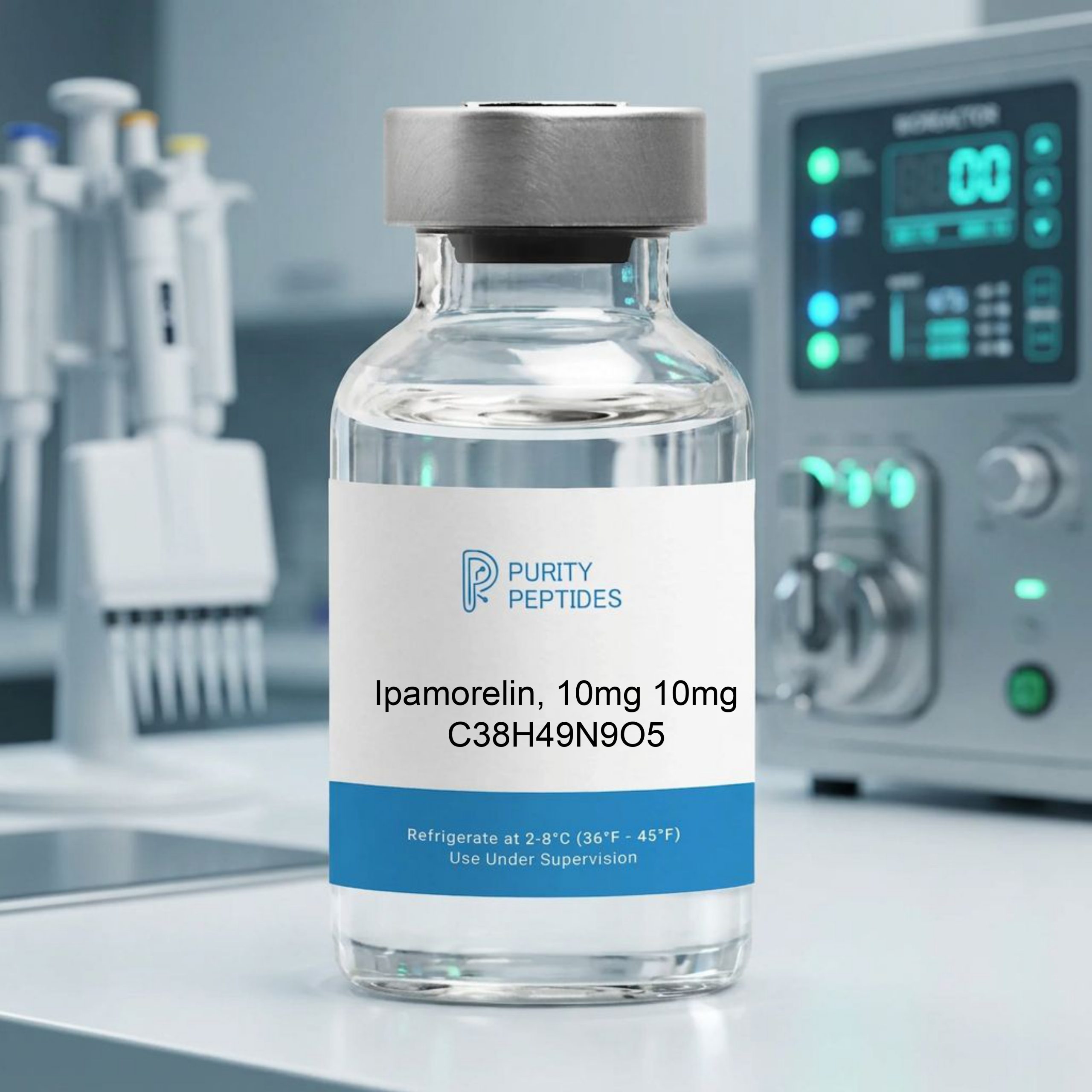
Ipamorelin is an elite synthetic pentapeptide (Aib-His-D-2-Nal-D-Phe-Lys-NH2) that acts as a highly selective agonist at the growth hormone secretagogue receptor (GHS-R1a), mimicking the action of endogenous ghrelin. Upon binding, it stimulates the anterior pituitary gland to release growth hormone (GH) in a natural, pulsatile manner. Crucially, Ipamorelin is completely selective for GH release; unlike older secretagogues (such as GHRP-2 or GHRP-6), it does not cross-react with receptors that trigger cortisol, prolactin, or ACTH production. This clean signaling pathway avoids unwanted fluid retention and cortisol-induced stress responses. The resulting GH pulses circulate to hepatic pathways, driving steady IGF-1 transcription, which accelerates cellular tissue repair, lipolysis, nitrogen retention, and the systemic recovery of skeletal and connective tissue structures.
What to Expect if Consumed
Expect a major improvement in slow-wave sleep depth, accelerated fat mass loss, optimized skin elasticity, faster muscle tissue repair post-exercise, and enhanced bone mineral density markers.
Possible Therapy Combinations
Pairs perfectly with CJC-1295 No DAC to generate a powerful synergistic growth hormone surge, or can be layered with TB-500 to maximize structural matrix repair after injuries.
Molecular Formula & Chemical Composition
Molecular Formula: C38H49N9O5. Sequence: Aib-His-D-2-Nal-D-Phe-Lys-NH2. Purity: >99% Pure Lyophilized Mass via HPLC validation profiles.
WARNING: This peptide compound must be handled and utilized exclusively under very high, correct professional and qualified medical supervision. Misuse can lead to unintended biological variations.
Scientific References
1. Raun, K., et al. (1998). ‘Ipamorelin, the first selective growth hormone secretagogue.’ European Journal of Endocrinology.
2. Johansen, P. B., et al. (1999). ‘The growth hormone secretagogue ipamorelin releases GH from pituitary cells via a selective GHS receptor mechanism.’ Endocrinology.
Reviews
There are no reviews yet.