
Product Category
Anabolic Somatofactors, Long-Acting IGF-1 Analogs & Muscle Growth Peptides
Action on the Human Body
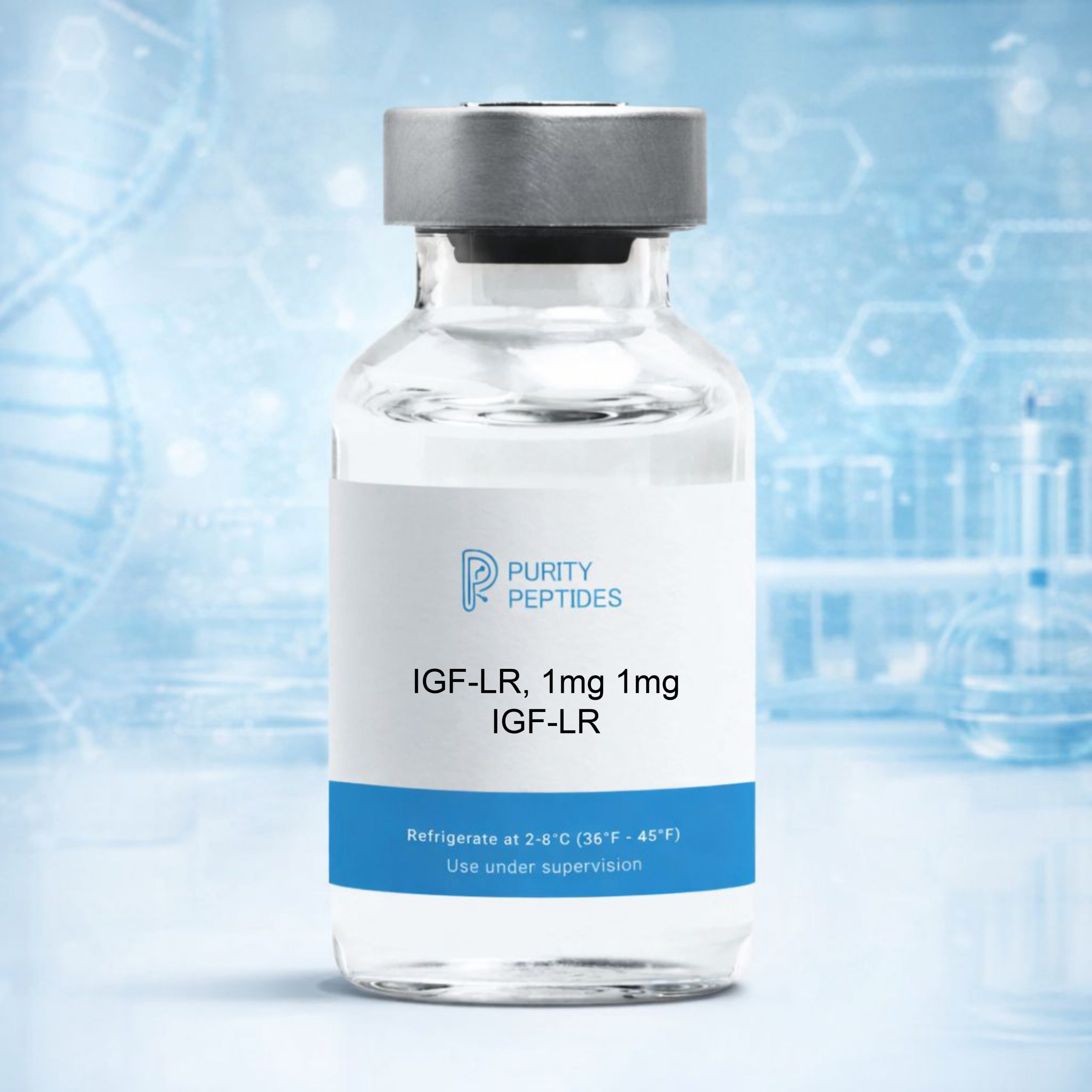
IGF-1 LR3 (Long Arginine 3 Insulin-like Growth Factor-1) is a synthetic 83-amino acid analog of endogenous human IGF-1, modified by replacing Glu at position 3 with Arg and adding a 13-amino acid N-terminal extension. These structural changes prevent the peptide from binding to insulin-like growth factor-binding proteins (IGFBPs), which normally deactivate free IGF-1. As a result, its biological half-life is extended to approximately 20–24 hours, compared to less than 10 minutes for standard IGF-1. The molecule binds with high affinity to the IGF-1 receptor (IGF-1R), triggering the intracellular MAPK and PI3K/Akt signaling cascades. This activity strongly upregulates ribosomal protein translation, drives rapid skeletal muscle hypertrophy, increases satellite cell proliferation, and facilitates true muscle hyperplasia—the actual splitting and creation of completely new muscle cells.
What to Expect if Consumed
Expect rapid and permanent accretion of lean muscle tissue, massive cellular nutrient partitioning directly into muscle cells, permanent strength upgrades, and highly accelerated structural connective tissue density.
Possible Therapy Combinations
Can be stacked with CJC-1295 No DAC / Ipamorelin to utilize endogenous growth hormone pulses alongside receptor saturation, or combined with BPC-157 to maximize connective tissue recovery alongside muscle hypertrophy.
Molecular Formula & Chemical Composition
Molecular Formula: C400H625N111O115S9. Structure: 83-Amino Acid Modified Growth Factor Peptide Chain. Purity: >99% Pure HPLC Monitored Mass.
WARNING: This peptide compound must be handled and utilized exclusively under very high, correct professional and qualified medical supervision. Misuse can lead to unintended biological variations.
Scientific References
1. Tomas, F. M., et al. (1993). ‘An long-acting analogue of insulin-like growth factor-1 (Long-R3-IGF-1) is significantly more anabolic than native IGF-1.’ Journal of Endocrinology.
2. Ballard, F. J., et al. (1996). ‘Structural and functional properties of insulin-like growth factor analogues with low affinities for binding proteins.’ Growth Regulation.
Reviews
There are no reviews yet.