
Product Category
Actin-Sequestration Monomers, Angiogenic Catalysts & Connective Tissue Recovery Peptides
Action on the Human Body
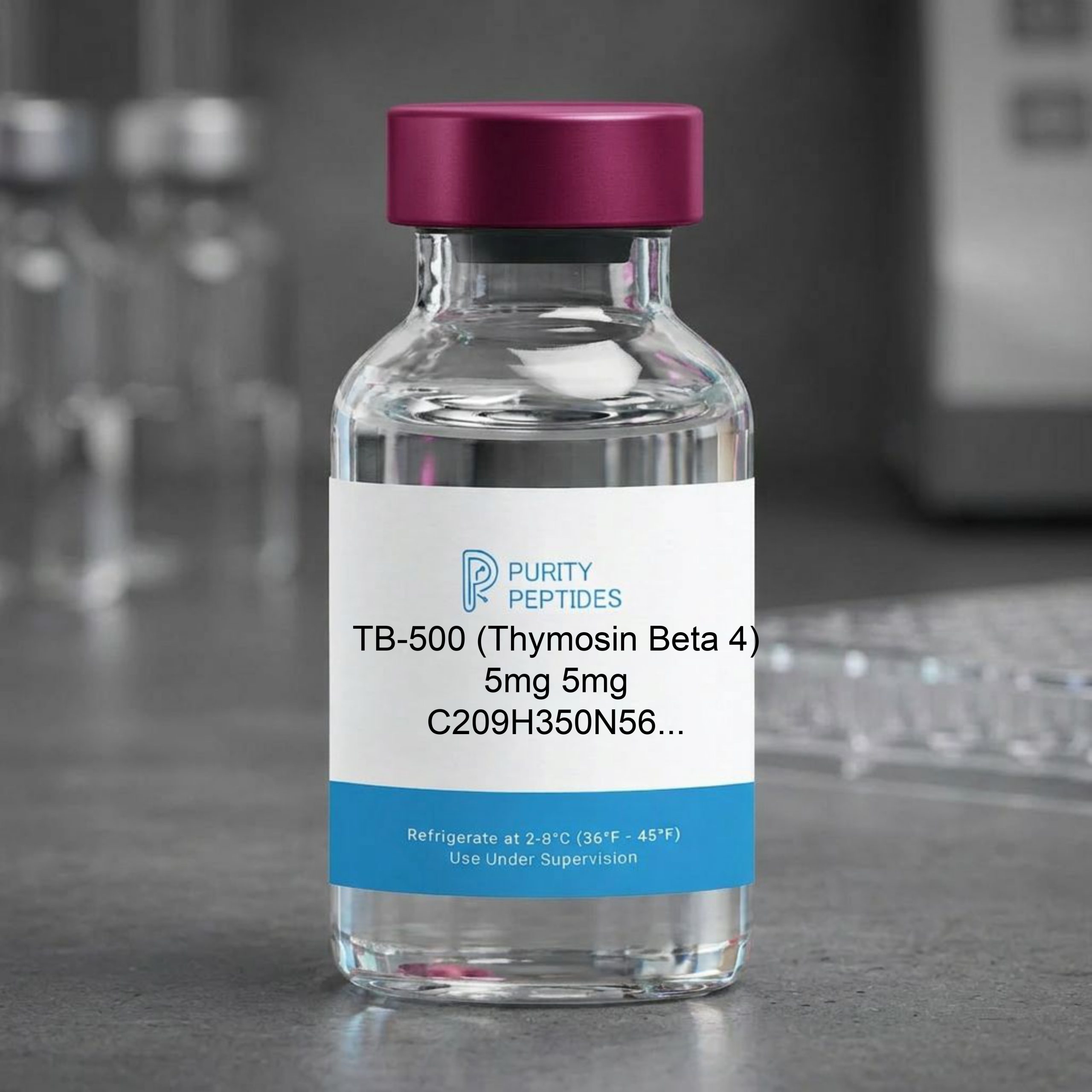
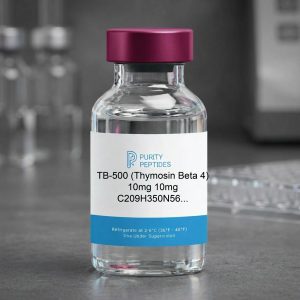
TB-500 is a synthetic analog of the naturally occurring 43-amino acid peptide Thymosin Beta-4, operating as the primary endogenous actin-sequestering molecule in human biology. Its mechanism centers on binding directly to G-actin (globular actin), which regulates actin polymerization to build the cell’s structural cytoskeleton. By controlling actin availability, TB-500 drives rapid cell migration, wound healing, and cellular remodeling, allowing fibroblasts, endothelial cells, and keratinocytes to quickly move across damaged tissues. It also promotes angiogenesis by upregulating vascular endothelial growth factor (VEGF), forming new micro-capillary networks that deliver oxygen and nutrients to injuries. Furthermore, TB-500 down-regulates pro-inflammatory cytokines, lowers toxic collagen deposition to prevent scar tissue formation, and accelerates tissue remodeling across muscles, tendons, and ligaments.
What to Expect if Consumed
Expect a significant reduction in soft tissue recovery times, improved joint flexibility, rapid clearing of localized inflammation, and enhanced repair of muscle and tendon tears.
Possible Therapy Combinations
Pairs perfectly with BPC-157 to build the gold-standard soft tissue recovery protocol, or can be combined with GHK-Cu to maximize structural extracellular matrix rebuilding.
Molecular Formula & Chemical Composition
Molecular Formula: C212H350N56O78S1. Sequence: Ac-Ser-Asp-Lys-Pro-Asp-Met-Ala-Glu-Ile-Glu-Lys-Phe-Asp-Lys-Ser-Lys-Leu-Lys-Lys-Thr-Glu-Thr-Gln-Glu-Lys-Asn-Pro-Leu-Pro-Ser-Lys-Glu-Thr-Ile-Glu-Gln-Glu-Lys-Gln-Ala-Gly-Glu-Ser-OH. Purity: >99% Pure Lyophilized Mass.
WARNING: This peptide compound must be handled and utilized exclusively under very high, correct professional and qualified medical supervision. Misuse can lead to unintended biological variations.
Scientific References
1. Goldstein, A. L., et al. (2005). ‘Thymosin beta4: actin-sequestering peptide regulates cell migration, angiogenesis, and tissue repair.’ Cytokine & Growth Factor Reviews.
2. Philp, D., et al. (2003). ‘Thymosin beta4 and wound healing: a review of tissue protective and regenerative mechanisms.’ Wound Repair and Regeneration.
Reviews
There are no reviews yet.